

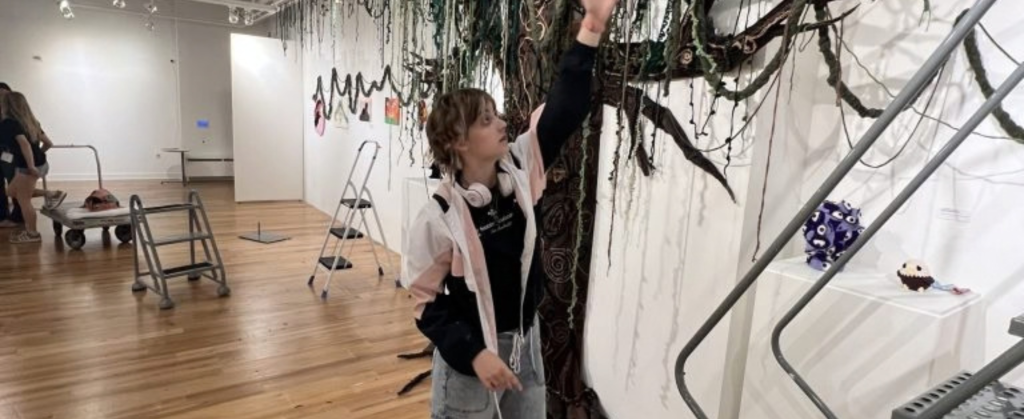
To say art is one of Grace Pett’s “sparks” is an understatement. “I’ve always been an artsy person, ever since I was really little. I kept doing stuff with art, took art classes all throughout school,” said Pett. Her freshman year of high school, when she joined 4-H, she took every opportunity to get involved in art. “I loved the process of getting judged at a county fair. I loved being able to show off my art. I loved all the opportunities with the arts, so Arts Camp, ArtBEAT!,” and she became a 4-H Arts Ambassador.
October 4-10 is National 4-H Week. We’re celebrating by highlighting the 4-H Ambassadors, a program that empowers youth to build confidence, creativity, leadership, and resiliency.
Arts Ambassadors learn about leadership, interpersonal skills, and how to promote the arts, encouraging others to participate. The program gave Pett opportunities to plan statewide events and facilitate workshops with younger 4-Hers interested in art. That reinforced her choice to major in Art Therapy at Mount Mary University, which combines things she loves: art, helping people, and psychology.
As part of Arts Ambassadors, youth join teams and decide on a group art project that they will create collaboratively. “You’re not just kind of creating your own thing; you have to collaborate and learn how to talk with people that are typically very different from you and have lots of different ideas,” said Pett. She appreciated the challenge of creating together as a team. “It’s challenging, but it’s really, really rewarding to see it all come together.”
When developing the Arts Ambassador model, Jay Johnson, 4-H Expressive Arts Specialist, wanted the experience to encourage a growth mindset, collaboration, and opportunities to develop communication skills. With those skills, the Ambassador program encourages youth to be leaders who think about others. “How do I make sure that everyone’s voice is being heard? How do I develop a sense of belonging when I’m in charge of a group?” said Johnson. “Being an Ambassador is not just about showing up at the state events, but also what does it look like to be a leader in those other spaces.”
Providing that environment for youth is possible largely because of the adult volunteers who participate. Through youth-adult partnerships, youth feel safe exploring their ideas (“sparks”) and trying new things. The Ambassadors program works with adults to help them learn how to empower youth voice in a supportive environment. Through training opportunities, adults are able to think through difficult situations and how to guide youth in decision-making without telling them what to do. Johnson helps adults think through possible situations. “How do you work with a difficult youth? How do we make sure we’re meeting the needs of neurodivergent young people? We spend a lot of time really trying to make sure that our youth have a voice,” he said.
Since the success of the 4-H Arts Ambassadors pilot program, more Ambassador programs have launched:
Leadership Ambassadors
In its second year, Leadership Ambassadors engage in opportunities to build personal leadership skills and encourage others to grow their leadership potential. They also participate in 4-H fundraisers, such as the Annual Meat Product Auction held at the Wisconsin State Fair.
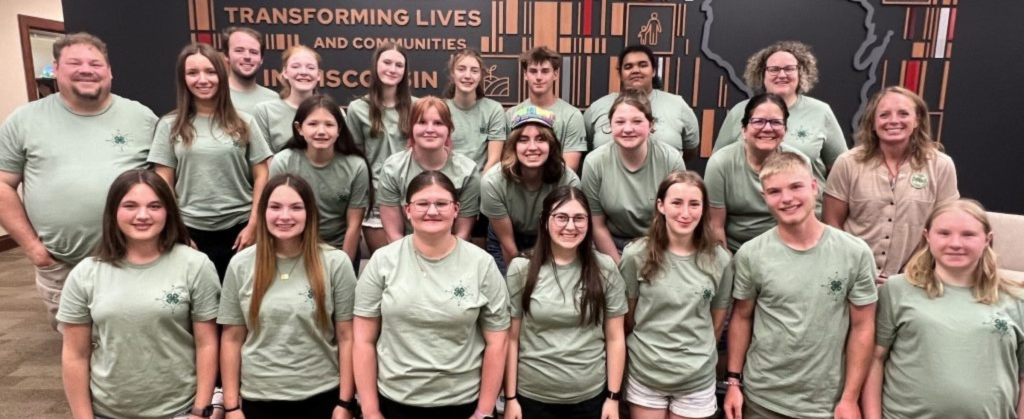
As a senior in high school, Sam Harpin has welcomed the chance to practice leading. “Stepping into a state role, it’s a lot harder, and helps you build yourself mentally and physically, even with just building up the nerve and courage to go talk to a random kid at a state event,” said Harpin. Working with other youth interested in leadership has given them opportunities to brainstorm, bounce ideas off one another, and offer critiques so the activities they create are the best possible. “I love teaching people. I love getting to help people and meeting with this group of kids this year; it’s just been great.”
Agriculture Ambassadors
In its first year, the Agriculture Ambassador program includes a group of 4-H youth who are interested in promoting Wisconsin agriculture and advocating for 4-H. Alivia Wiese became an Ambassador because she wants to educate and advocate for Wisconsin Agriculture. After nine years participating in her local 4-H club, she was ready for a new challenge. “Adults can teach us all day long, but youth-to-youth connections are really powerful, and when there’s younger youth, they have to have people to look up to, and so we’re role models to all of them,” said Wiese.
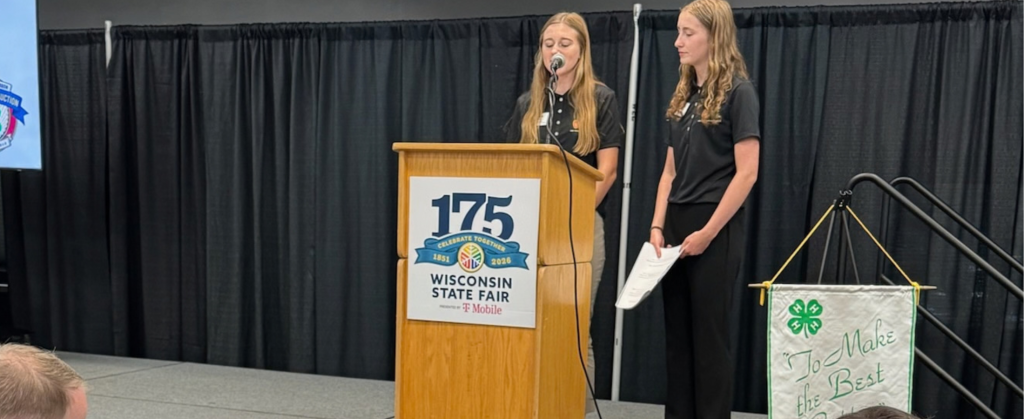
Having this opportunity alongside her peers is important for Wiese because the connections that she makes now will continue to support her as she pursues a future in agriculture. “Being able to talk to people that are your age, that are older than you, anybody that you come across in life is really, really important,” she said, “Part of that is being able to share your story with other people.”
Outdoor Ambassadors
New for 2026-2027, the Outdoor Ambassadors provide similar opportunities for youth interested in outdoor recreation and stewardship, including shooting sports, ATV safety, outdoor exploration, and local ecosystems.
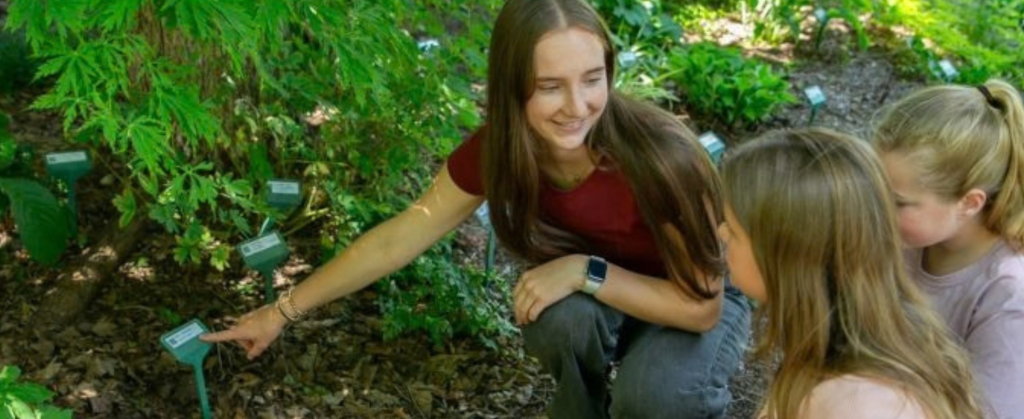
The Ambassador model emphasizes giving youth the opportunity to practice leadership and communication in a collaborative environment that builds social connection. “In many cases, we start working with them when they’re 14, and we continue working with them until they’re 19. And that’s kind of the secret sauce of our programming,” said Johnson.
4-H youth in grades 9-13 who are interested in the Arts, Leadership, Agriculture, or Outdoors can apply to become a Wisconsin 4-H Ambassador Teams. Learn more at https://4h.extension.wisc.edu/statewide-events-and-opportunities/wi-4-h-ambassador-team/.