

Data Centers
Data Centers in Wisconsin
The UW–Madison Division of Extension is committed to providing educational resources to meet the needs of communities in Wisconsin. This website is a source of information about data centers, their operations, and considerations related to their potential development and siting in Wisconsin communities.
Data Center Basics: What Is A Data Center?
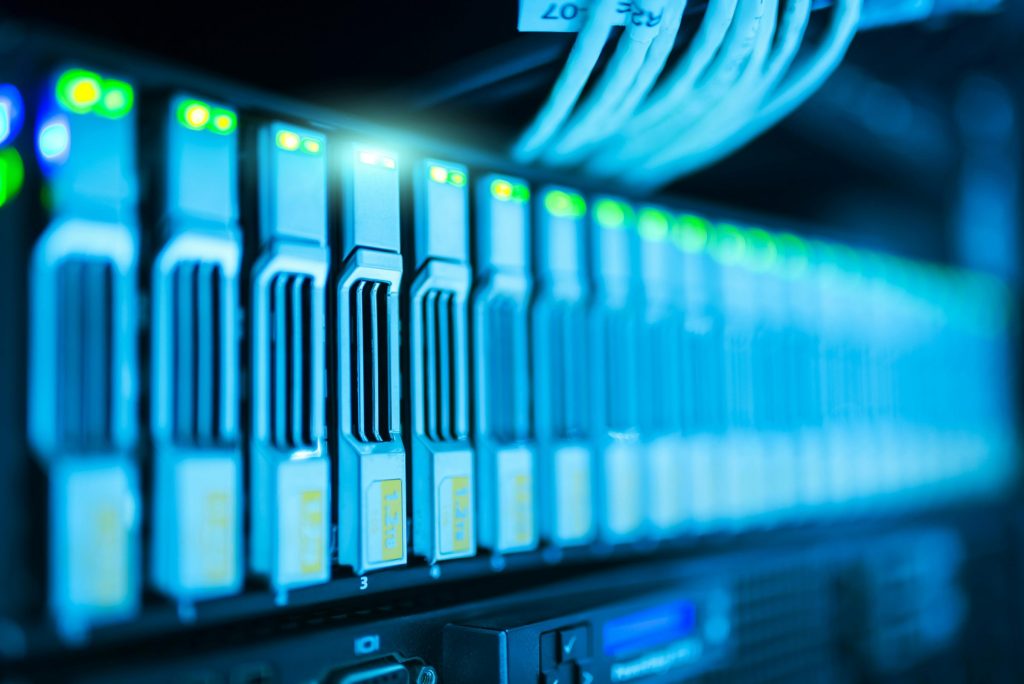
Data centers are buildings that house servers, computers, and equipment used to provide computation, cloud resources, and data. Not all data centers are the same in size, scale, and purpose.
Hyperscale Data Centers
Hyperscale data centers are the largest type of data center.
- Purpose: AI, cloud computing, and other advanced computing
- Requires: higher level of electricity demand, onsite back-up electrical capacity, and large-scale cooling systems
- Power Usage: over 100 megawatts (MW)
- Size and scale: Hundreds of acres
- Location: areas with proximity to high-voltage transmission lines and high-capacity data networks
Smaller Scale Data Centers
Smaller scale data centers use less power and handle general purpose tasks.
- Purpose: general computational tasks
- May be shared by multiple enterprises or single
- Power Usage:
- Small scale: 1- 5 MW
- Medium size: Under 50 MW
- Size and scale: 40 acres or less
- Location: wide range of communities.
Developed based on information from Commonwealth of Pennsylvania Data Center Toolkit (PDF), IBM, and Penn State University Extension.
Data Center Development in Wisconsin
Several factors make Wisconsin appealing for data center development, including:
Where are Data Centers Located in Wisconsin?
View the Wisconsin Data Center Map to learn more about:
Created by Research Associate Professor Anna Haensch, UW–Madison Data Science Institute.
Data Center Location and Siting Factors
What do data center developers look for when building a new data center? A number of siting factors impact whether a location is a good fit for the requirements of a data center.
Electricity Infrastructure
Hyperscale data centers require substantial energy capacity (100MW+) making it less likely large-scale data centers would settle in remote parts of Wisconsin not served by high-voltage transmission lines.
Community Buy-In
Data center site location and development is a timely, costly endeavor. Wisconsin has already seen several large scale facilities rejected by local communities. A community’s willingness and ability to move a data center forward may be one of the most important aspects for locating a data center facility.
Water Availability
Water availability may be important to the data centers, depending on how they are cooled. Most data centers require a municipal water supply to provide the water needs within the data center. Smaller, non-hyperscale data center systems may not require a public water system.
Access to Broadband/High-speed Internet
Data centers generate and store data and require sufficient broadband access to connect with the internet. Data center development will likely gravitate towards areas already served with high speed internet.
Community & Resource Considerations
Energy use is one of the most common concerns raised by residents when a hyperscale data center is proposed. The amount of electricity a data center uses depends on several factors, including the size of the facility, the cooling system it uses and the type of customer it serves. Some cooling systems use more water and less electricity, while others do the opposite. A common way to measure energy efficiency is through a Power Usage Effectiveness (PUE) rating. This industry standard rating compares the total energy used by the entire facility to the energy used by the computer equipment itself. A lower PUE indicates that a larger share of the facility’s electricity is being used for computing, rather than supporting functions such as cooling, lighting and other building operations. A PUE rating will always be above 1.
The amount of water a data center uses depends largely on its cooling system and the overall size of the facility. Some data centers rely on water-based cooling systems, while others use air-cooled systems that require little or no water. A common measure of water efficiency is Water Usage Effectiveness (WUE), which compares the amount of water used to the amount of energy consumed by the data center’s computer equipment. Lower WUE values indicate more efficient water use. Across the industry, many facilities average about 1.8 liters of water per kilowatt-hour of electricity used, while highly efficient facilities may use less than 0.2 liters.
There is often a tradeoff between water use and energy use. Facilities that rely on dry or closed-loop cooling systems typically use less water but may require more electricity for cooling. In contrast, facilities that use water-based evaporative cooling systems often use less electricity for cooling but consume more water.
The most water intensive aspect of a hyperscale data center’s workflow happens offsite with electricity generation, using more than 10 times as much water as cooling. Learn more: UW Milwaukee Data Center Legislative Model Report.
Before a data center is approved, a municipality may require engineering studies to evaluate potential impacts on local water and wastewater systems. These studies can help determine whether existing infrastructure has sufficient capacity to meet the facility’s needs and identify any upgrades that may be necessary.
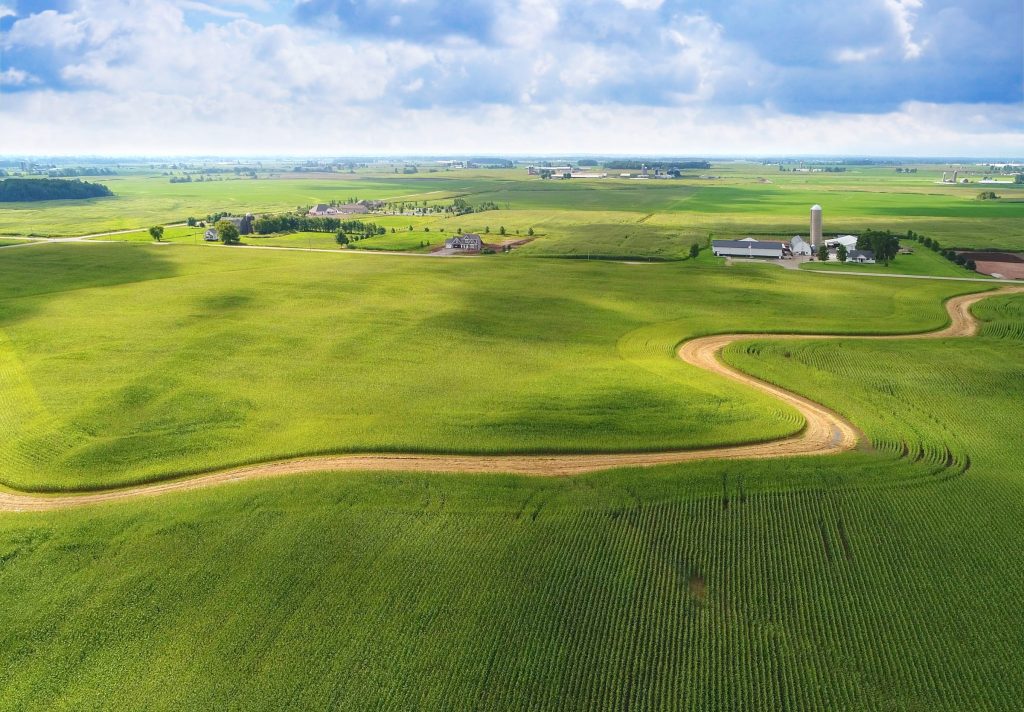
Hyperscale data centers have a large physical footprint which in some cases may exceed 1,000 acres. Developers often target farmland or undeveloped open space in urban adjacent rural areas. Public concerns over the impact on local resources is not solely focused on water and electricity, but includes the overall concern of the environmental impacts a large-scale land use development may create.
The Wisconsin Department of Natural Resources oversees environmental analysis when development uses state or federal grant funds, state agency actions are required, or if the proposed development potentially impacts wetlands, navigable waters, stormwater discharges, floodplains, shorelands, high-capacity water withdrawals, or wastewater facilities. County/municipal zoning ordinances may also introduce development standards used to best “fit” these large land use developments into their communities.
The Role of Local Government in Permitting & Zoning Data Centers
Local governments including counties, cities, villages, and towns play a role in permitting data centers proposed in their communities and have some ability to regulate the location and standards of data centers. Data center developments are subject to local zoning ordinances and project permitting rules. A local municipality cannot legally exclude land uses that meet all local land use ordinances. Zoning is intended to minimize impacts to neighboring land uses, by placing regulations on specific conditions such as building heights, setbacks, noise, and the establishment of zoning districts in the community where similar land activities may develop.
How does zoning authority work?
A start to understanding the myriad of zoning regulations is first to understand that villages and cities have zoning authority in their territory. Towns, however, may or may not have zoning authority, depending on if their county has County Comprehensive Zoning, and if they have, or have not, opted out of the County-wide Comprehensive Zoning. View the Department of Administration’s website for a listing of which counties that have Comprehensive Zoning.
Reviewing Zoning Districts
As communities weigh the decision of regulating and permitting data centers, they should review and understand their zoning districts, to determine which existing districts may be developable by data centers through either permitted, or conditional uses.
To avoid uncertainty about the development/location of data centers in a county or municipality, either may want to review and potentially update their Zoning Ordinance and Zoning Map to ensure consistentancy with their comprehensive plans.
- Municipalities and counties should review their zoning ordinances, looking for what may be allowable (either permitted or conditional uses) or may not be allowable in zoning districts such as commercial, light industrial, industrial, warehousing, storage, or any other potential applicable non-residential land use.
- Until a zoning ordinance has been changed (and adopted by the local governing body), the old ordinance language applies to any permit applications, unless a moratorium has been issued to review/study potential impacts and potentially applicable development standards.
Process Flow for Updating Zoning Ordinances
Developed by the Center for Land Use Education
1
Proposal to amend the zoning ordinance is received by governing body and referred to the plan commission
2
Public notice and mailing notices to parties in interest
3
Pre-planning: identify process, opportunities to participate and public participation techniques, typically done by staff and plan comission
4
Provide an introduction to data centers and gather public input about data centers through in-person events and/or survey
5
Considering public input, plan commission develops a recommendation, typically with additional opportunities for public participation at meetings.
6
Public hearing
7
In response to public comments, plan commission may modify draft zoning ordinance or forward to governing body
8
Governing body may approve, modify, or deny the proposal or return it to the plan commission with directions to make additional changes
9
Publication of amended ordinance and effective date
Wisconsin Government Roles in Data Centers At a Glance
Developed based on information from the Wisconsin Public Service Commission
Resources
Wisconsin/Regional Resources
- Guide to County Regulation, Wisconsin Counties Association
- Data Center Resource Guide, Wisconsin County Code Administrators
- Community Checklist for Evaluating Data Center Impacts, Alliance for the Great Lakes (PDF)
- Data Center Playbook, Alliance for the Great Lakes
General Resources
Wisconsin Data Center Moratoriums
Some communities have moved to create data center moratoriums until the community can review and study the potential impacts a new, large land use like a data center has on the community, including:


Contact Us
For more information, contact Karl Green, Community Planning Specialist.
608-785-9763
Training & Information Sessions
Extension provides training to communities and units of local government. Contact Karl Green or your county educator to learn more.
About this Website
This website was updated on September 15, 2026 and reflects information available at that time. Information pertaining to data centers is rapidly evolving and can quickly become out of date.