In Wisconsin, farmers are increasingly turning to one another to share ideas, test new practices, and learn what works on real farms. Organized groups of farmers are creating opportunities for this type of peer-to-peer learning by bringing together farmers, researchers, and conservation partners to address water quality challenges while supporting productive and profitable farms.
The University of Wisconsin–Madison Division of Extension supports farmer-led efforts by collaborating with many groups to design and interpret on-farm research, connect groups with University experts, and provide outreach opportunities that highlight the innovative work farmers are doing across the state.
Many of these groups formally receive support through the Wisconsin Department of Agriculture, Trade and Consumer Protection’s Producer-Led Watershed Protection Grant Program ↗️. Funding from the program supports on-farm demonstrations and research projects focused on reducing nonpoint source pollution from agricultural land while identifying practical conservation practices for farmers.
Building Consistent, Statewide Research
Extension helps coordinate research projects across participating groups by developing consistent, science-based protocols that can be replicated statewide. These projects allow farmers to evaluate practices under real-world conditions while generating meaningful data that supports statewide conservation efforts and strengthens peer-to-peer learning opportunities among farmers across Wisconsin.
“We recognize the producer-led groups’ dedication to expanding innovative real-world conservation practices largely drives the program’s success in improving water quality and building soil health on WI farms. Looking ahead from a program perspective, farmers are regularly communicating that they’d like more opportunities to collaborate with other groups and participate in research and demonstration that contribute meaningful data to support practice advancement,” shares Dani Heisler Producer-Led Watershed Protection Grant Program Manager, “Through more formalized collaborative efforts with Extension and local partners we developed a project framework to better meets those requests and supports producer-led on-farm innovation that directly aligns with their own groups’ goals and priorities.”
On-Farm Research in Action
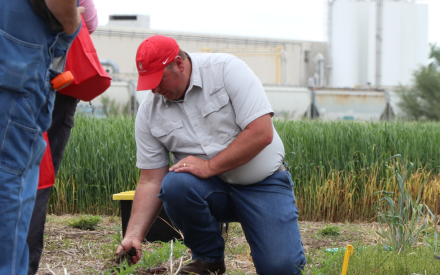
One example of Extension’s on-farm research collaboration with a Producer-Led Watershed Group is with the Eau Pleine Partnership for Integrated Conservation (EPPIC) Watershed Group in central Wisconsin. A local farmer and EPPIC leader is participating in an on-farm interseeding research project in Marathon County. In 2025, the farm tested different cover crop interseeding strategies within a corn field. Interseeding allows cover crops to establish while the cash crop is still growing, helping address the challenge of delayed cover crop planting after harvest.
Working alongside Extension, DATCP, and Marathon County Planning and Zoning, the project compared cereal rye and a multi-species cover crop mix interseeded into corn when the crop was about two feet tall. Researchers monitored cover crop establishment throughout the growing season and later evaluated corn yield and cover crop biomass.
In the first year, results showed that corn yields remained consistent across the cereal rye, multi-species, and no-cover crop treatment areas. However, the multi-species mix produced significantly more biomass than the cereal rye treatment. This season, the farm plans to continue the project by planting soybeans and monitoring whether last year’s cover crop treatments influence soybean growth and yield.
Projects like these highlight the value of producer-led learning networks and the role Extension plays in helping farmers test ideas, share experiences, and make informed decisions grounded in both research and real-world experience.
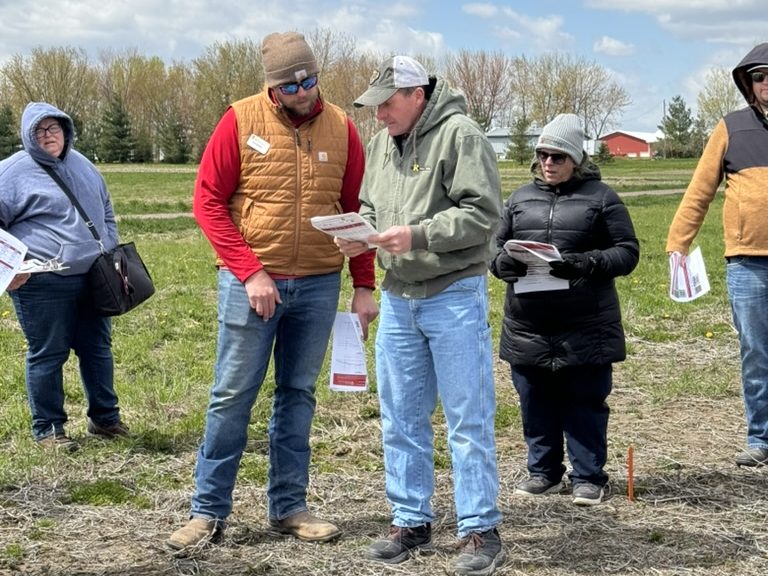
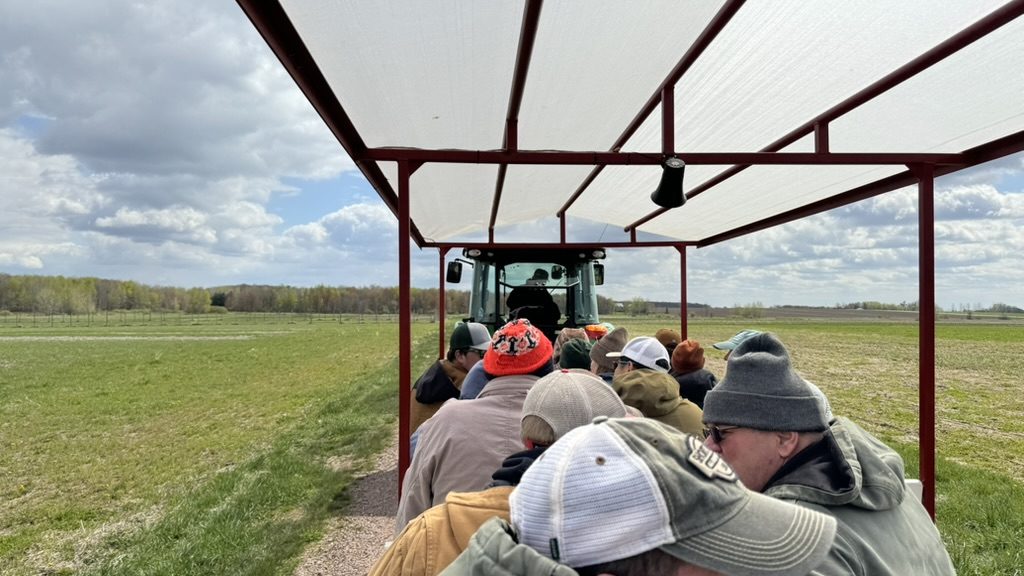
EPPIC has several field days planned throughout the growing season, creating opportunities for farmers to see projects firsthand and learn more about implementing new practices on their own operations. On May 7, Extension hosted a Cover Crop and Forage Field Day in collaboration with EPPIC at the Marshfield Agricultural Research Station. The event brought together farmers, conservation professionals, and researchers to learn directly from ongoing field trials and demonstrations.
During the field day, Caleb Armstrong, Wisconsin Land and Water Conservation Specialist and a lead coordinator for EPPIC, shared that the group continues to see growing participation. “We are still building momentum. We saw the biggest growth in our farm tours just last year,” Armstrong said. He also noted that farmers are increasingly inviting neighbors and fellow producers to attend events, helping expand interest and participation across the watershed.
Combined, on-farm research projects and field days create valuable opportunities for farmers to see conservation practices firsthand and have conversations with peers who are experimenting with new approaches on their own operations. Extension continues to play a key role in supporting farmer-led groups as they learn, adapt, and strengthen conservation efforts across Wisconsin.