Dane Elmquist, Extension Conservation Cropping Outreach Specialist
Dane Elmquist serves as a Conservation Cropping Outreach Specialist with the UW–Madison Division of Extension, supporting farmers and agricultural professionals across Wisconsin in adopting and improving conservation cropping practices. His work focuses on cover cropping, rotational diversification, and other research-based strategies that can improve agricultural sustainability and profitability.
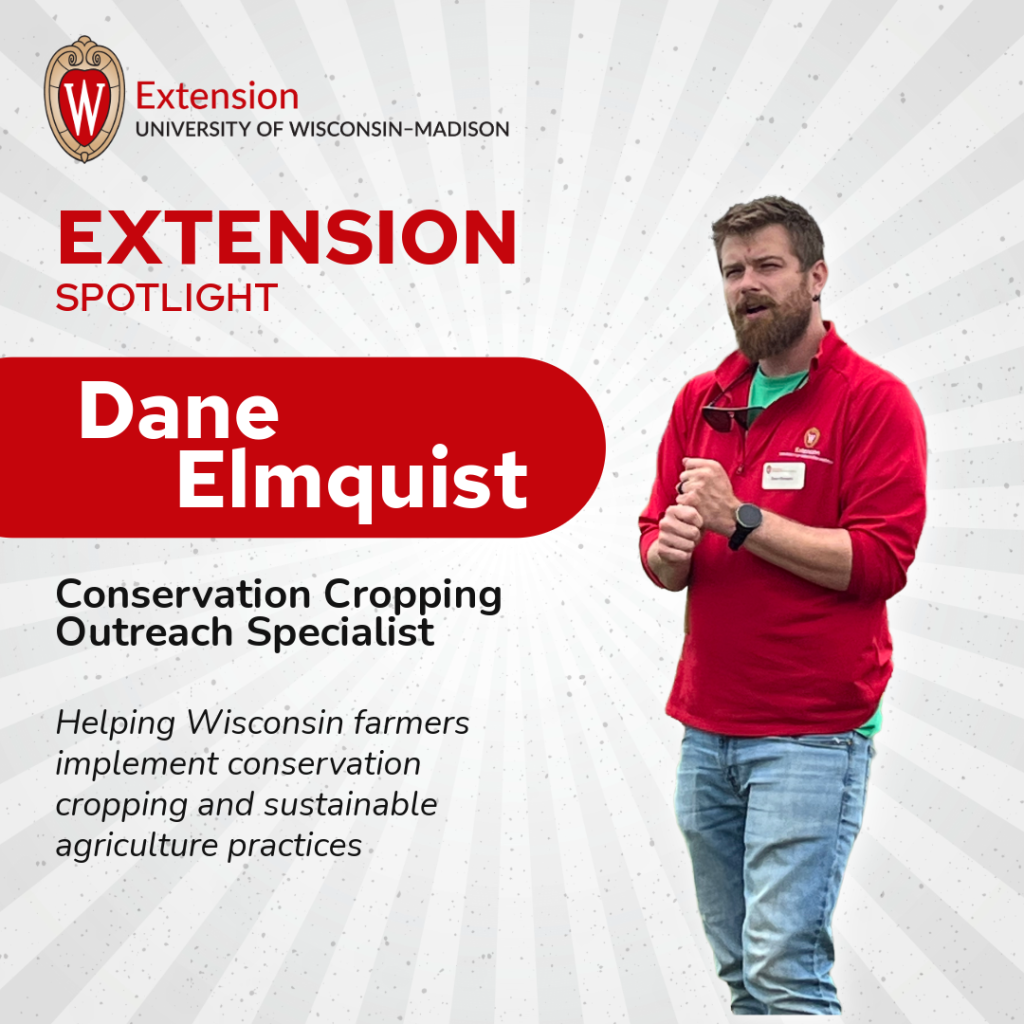
Dane brings a strong background in entomology, soil health, and agricultural research to his role. He earned a B.S. in Ecology from the University of Minnesota, an M.S. from Washington State University, and a Ph.D. from the University of Idaho. His research has explored soil biodiversity and ecology, above- and belowground interactions, chemical ecology, and citizen science. Before graduate school, he worked with the University of Minnesota Monarch Lab and the USDA Agricultural Research Service.
Dane’s interest in Extension grew from working directly with farmers and translating research into practical information. He was drawn to his current role because it combines his interests in sustainable agriculture, entomology, research, and farmer education.
“I knew that Extension was something that I felt passionate about and that I could really take some of the skills I’d been developing over the years in the research world and utilize that to work with the people who are actually going to be using the research,” Dane said.
In his statewide role, Dane works with farmers at all stages of conservation adoption, from those considering cover crops and reduced tillage to experienced producers addressing emerging challenges. A key focus is integrated pest management (IPM), including how conservation practices can support beneficial insects and reduce reliance on insecticides.
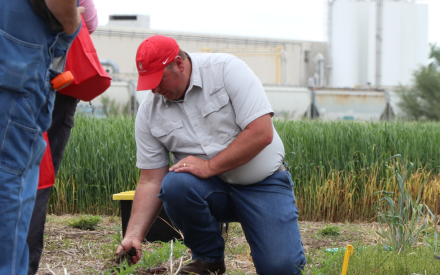
Much of Dane’s work takes place directly on Wisconsin farms. Through projects with the Dane Demo Farms Network and other partners, he studies questions such as how cover crop termination timing and reduced insecticide use affect pest management and beneficial insect populations. These projects are driven by farmer questions, creating opportunities for researchers and farmers to learn from one another.
“I really value that on-farm research component,” Dane said. “You could have 10 years of work if you wanted to, because there’s so much curiosity and so many questions. I get to learn a lot just from those conversations, too.”
One example of this work is a farmer who decided to eliminate insecticide seed treatments from his soybean production after learning more about beneficial insects. Dane has also helped identify a rare species of beneficial ground beetle in a long-term no-till, cover crop field in Winnebago County, highlighting how conservation practices can support insect biodiversity and ecosystem services.
For Dane, bringing an entomology and agroecology perspective to conservation cropping is what makes his work unique. He considers the broader impacts of farming systems, including pest management, biodiversity, and the ecosystem services provided by beneficial insects.
To contact Dane or an Extension agriculture expert or ask a question, visit:
go.wisc.edu/ContactExtensionAgriculture